

The Chairman of Amalipe was a panelist at the OSI forum “The Next 10: Bulgaria and the World in 2035”
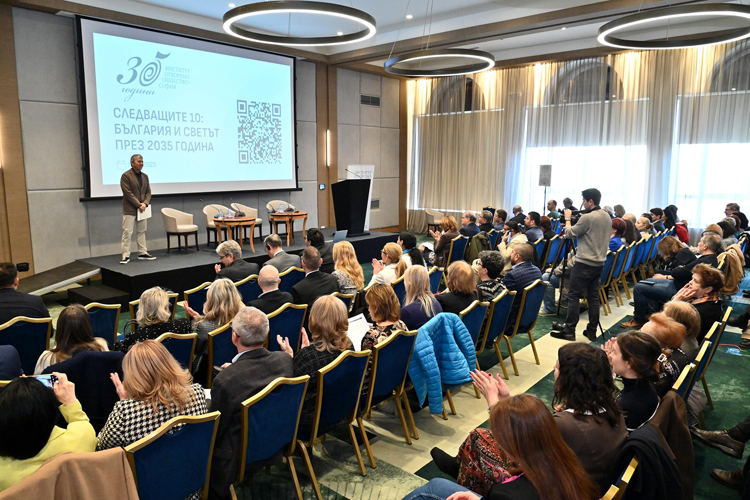
Over a hundred people – representatives of the civil sector, academia and the diplomatic corps in our country – participated in the conference “The Next 10: Bulgaria and the World in 2035”, organized by the Open Society Institute – Sofia Foundation. The occasion of the conference was the 35th anniversary of the foundation’s establishment, and its immediate goal – to outline the challenges and opportunities facing the development of Bulgarian society in the next decade in an increasingly unpredictable world. Among the participants were Teodora Krumova and Deyan Kolev from the Amalipe Center.
Over a hundred people – representatives of the civil sector, academia and the diplomatic corps in our country – participated in the conference “The Next 10: Bulgaria and the World in 2035”, organized by the Open Society Institute – Sofia Foundation. The occasion of the conference was the 35th anniversary of the foundation’s establishment, and its immediate goal – to outline the challenges and opportunities facing the development of Bulgarian society in the next decade in an increasingly unpredictable world. Among the participants were Teodora Krumova and Deyan Kolev from the Amalipe Center.
The prospects for the development of civil society and its role in the period until 2035
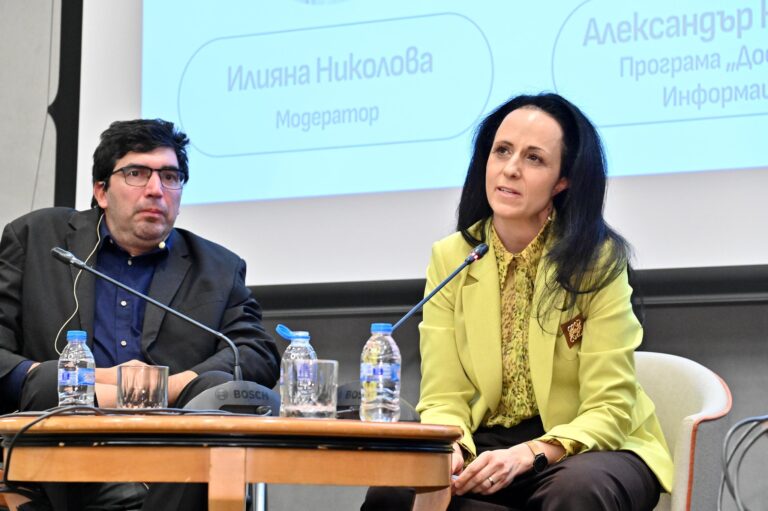
was one of the main topics discussed during the forum. The discussion was attended by Iliyana Nikolova, Executive Director of the Civic Initiatives Workshop Foundation, Alexander Kashumov, Executive Director of the Access to Information Program, Nadya Shabani, Director of the Bulgarian Center for Non-Profit Law, and Deyan Kolev, Chairman of the Board of Directors of the Center for Interethnic Dialogue and Tolerance “Amalipe”. The latter shared that it is necessary for the Roma issue to become one of the main priorities in the next 10 years. Currently, this is not the case and many institutions prefer not to work explicitly on activities aimed at the Roma. Kolev emphasized that nearly a quarter of young people entering the labor market are from the Roma community (according to World Bank data), therefore it is necessary to invest in their education and qualification. The efforts to do so are achieving success and are destined to succeed, as the Roma in Bulgaria and Europe are currently undergoing their own modernization process, which is related to the increase in educational levels. It is also necessary to prioritize the fight against anti-Roma stereotypes and discrimination so that young educated Roma can find a worthy place in the labor market. This is not always the case and often Roma youth face discrimination in establishments, swimming pools and even in the classroom. The latter is unacceptable and young Roma (especially those who have lived abroad) suffer greatly from any form of unequal treatment.
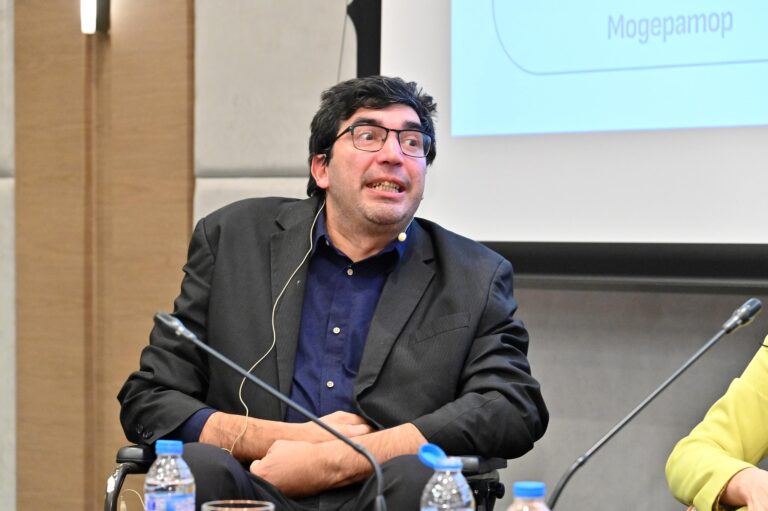
Kolev also drew attention to the need for Roma organizations and all NGOs to receive funding opportunities through operational programs. He pointed to his work in the Education Program Monitoring Committee as an example of real cooperation with public institutions, which has led to the allocation of serious resources to operations involving Roma and vulnerable groups. An important success is that NGOs can be lead beneficiaries and partners in these projects. At the same time, two obstacles have been placed at the national level that stop real NGO participation – the lack of advances for NGO projects and de minimis. As a result, organizations do not apply or are only partners in the projects. “Who ordered this outrage?” joked the chairman of Amalipe and pointed out that by 2035. these problems must be overcome.
The issues of the state of the economy and the
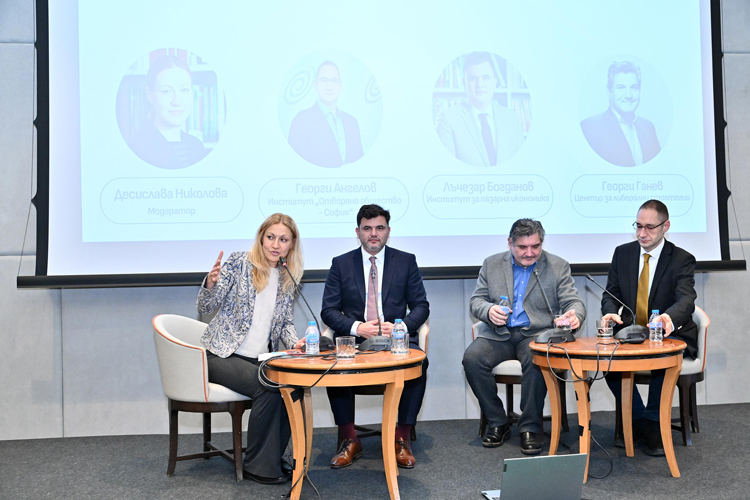
opportunities and risks facing its development over the next 10 years were discussed by Desislava Nikolova, Senior Economist at the World Bank in Bulgaria, Georgi Angelov, Senior Economist, Open Society Institute – Sofia, Lachezar Bogdanov, Chief Economist at the Institute for Market Economics, and Georgi Ganev, Program Director of the Center for Liberal Strategies and Chief Assistant Professor at the Faculty of Economics, Sofia University. They emphasized that economic growth could slow down significantly without reforms and examined different scenarios for real growth of the Bulgarian economy.
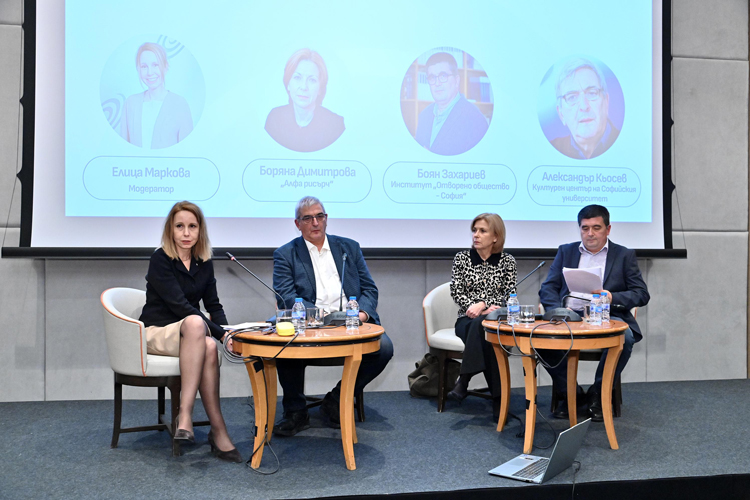
What are the public perceptions in Bulgaria about democracy and the EU and the values associated with them and what does Generation Z think? This was the topic of the discussion, which was attended by Elitsa Markova, Program Director at the Open Society Institute – Sofia, Boryana Dimitrova, Manager of Alpha Research, Boyan Zahariev, Program Director at the Open Society Institute – Sofia and Alexander Kyosev, Director of the Cultural Center of Sofia University. Boryana Dimitrova presented data from research by the Open Society Institute – Sofia on the state of democracy in our country: attitudes, transformations and generational faults. Alexander Kyosev, in turn, made a cultural reading of the sociological data.
The text uses information and photos from the Open Society Institute.