

Coffee time women style: the contribution of Roma women to Bulgarian history
On the occasion of June 10th, the International Day of Roma Woman, Center Amalipe organized a virtual coffee meeting “Coffee time women style: the contribution of Roma women to Bulgarian history”. We have organized such meeting for first time last year provoked by the COVID 19 pandemic. However, it turned to be a very inspiring initiative and we decided to repeat it this year. Anyone could join through the Zoom.us platform and actively participate in the discussion or watch the event live via Live streaming on our Facebook page. This time we decided to speak about a topic which is not much known: the contribution of Roma women to national history. The aim was not just to present unknown facts about Roma women in Bulgaria, but also to inspire local Roma women make a research, collect information, find documents and keep for the generations the memory for women who had been important for their local community and context.
Over a cup of coffee, we talked to over 30 participants, as many more watched and commented on the live broadcast on Facebook. In an informal and very sincere conversation, women and men of different ages shared their knowledge and memories of famous and unknown Roma women. They told the stories of Roma women who inspired and motivated them.
Before the discussion, we invited some very special ladies – successful women who have proven in their profession to share through their experience the role of Roma women in our history and modern times.
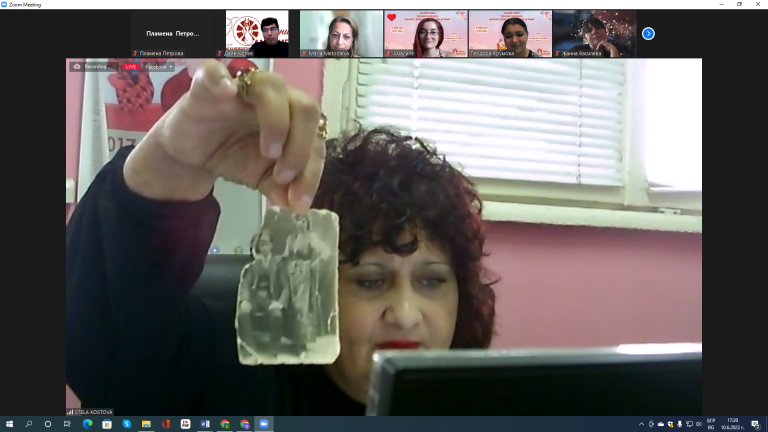
Stella Kostova – President of the Association “Roma Academy of Culture and Education”, told the audience details about the women’s uprising in 1918 during the WWI. “This women’s revolt started the women’s movement in Bulgaria. Almost no one knows that in 1896 the first strike of the Bulgarian proletariat was in Sliven and was initiated by the textile workers. Most of them were from the Roma community. During the revolt in 1918 women have come out to fight for their rights to feed their children. After this great protest, they worked in the factories and sent then gendarmerie against them. Then the famous Tiana Nedeva, a 16-year-old Roma woman who worked in one of the textile factories, was killed. Peyo Dachev, after whom Nadezhda neighborhood was named before he was renamed, was also killed. From there the trade union movement in Bulgaria started. We should be proud as women and as Roma women. This is nowhere in history and no one knows it, but it happened. “
Stella emphasized that if we are not interested in our history, we cannot tell young people what to be proud of. There is no way for them to know that we are people who have given a lot for our country. She also showed a photo of her great- grandmother – Ivanka Hadjikostova and shared that she was the daughter of the Sliven fighter for national freedom Ivan Hadjikostov. These women have supported their husbands and families and we should be proud of them.
“The more examples we show and the more we delve into the search for who is who, the more we help our country, our young people,” Stella Kostova said. She also reminded that the birth of the circus in Bulgaria is also related to Roma and women.
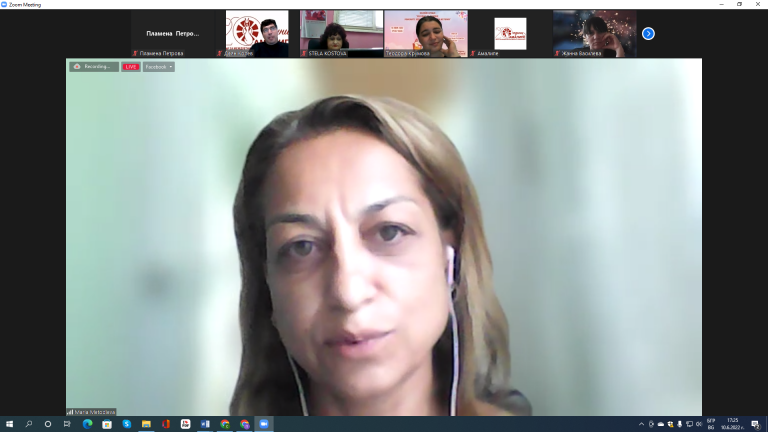
Maria Metodieva, Director of Institutional Partnerships at the Trust for Social Achievement, said: “I started working at the unenviable age of 17, helping the Romani Bach Foundation at the Faculty neighborhood. What I have seen during these years from 1996 until now are the extremely touching stories of the women from the Faculty district who support their children and families. Roma women live extremely difficult lives. I remember that there was only one woman in the Faculty district who worked as an assistant educator. Now in this school (in the Faculty district ) there are many women of Roma origin who work as educators or teachers. During these 25-30 years, I have witnessed how Roma women are waking up.”
Maria also told about several women who inspired her. One of them was Stoyanka Sokolova, who was one of the first journalists or women who had the ambition to publish a newspaper on Roma issues and Roma culture.
“As much as we want, the girls still have difficulties in some places and the sociological research and the various stories we hear every day prove it. I really want the girls to be able to choose and decide their destiny without having to do what their parents did in the name of preserving the honor, the tradition, ” Maria concluded.
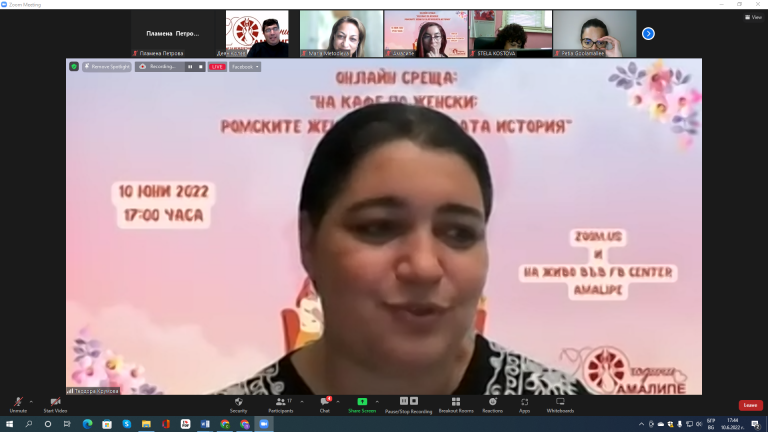
Teodora Krumova, program director of Center Amalipe brought us back to the period after 1944. “Then the Communist Party decided to apply in the Roma community the theory of women as mothers, heroines and hard workers, following the policies in the USSR and Bulgaria at that time. This has played a big role. At that time they began to make the first “leadership academy” of its kind. They called them schools for raising the general and everyday culture of Gypsy women. The first such school in 1961 in Asenovgrad enrolled 30 women for 45 days. Within these schools, in addition to showing them the modern development of life, they also spoke to them about Roma culture. This has subsequently changed. The Communist Party has encouraged the participation of Roma women in public life. There are also Roma women MPs, municipal councilors, something we can’t be proud of after 1989.”
After the stories of our panelists, the discussion continued as the participants and men and women told about the examples that motivated and inspired them. Everyone agreed on the importance of the role of the Roma woman, both in our past and today in our time. We all need to talk about these examples to give courage to many other girls who face problems along the way or do not have enough faith in their abilities.
Dream, girls, make your dreams come true and every day will be yours!
Our team decided to extend the initiative and organize further similar discussion at local level bringing for the coffee drinking more local Roma women within the RTransform project.
 RTransform is an international initiative aimed at the active inclusion of Roma women and girls in social life and the guarantee of their rights. The project focuses on promoting equal access to quality and inclusive education, training and lifelong learning for Roma women. The main idea is to create a bridge between Roma women and young girls, to build an environment of trust and continuity, which will be an opportunity for dialogue and debate between different countries.
For 18 years, our partners from Drom Kotar have been organizing the so-called “Meetings of Roma Students” (RWSG), an initiative organized with the active participation of Roma women from all over Europe to exchange experiences and ideas for successful educational integration and demonstrate role models in the community to inspire other Roma women and girls.
The aim of the initiative is to encourage active Roma women from different localities to unite other women around them, with which to create a space in which to discuss the topics described above, to create support, motivation and opportunities for development.
