

Intercultural Education Beyond Borders: Lessons from Peru (Part I)
Driven by the belief that intercultural and civic education (we view them as a unified concept, not just because of Standard 13) should be the foundation of every educational system, and that different countries can offer diverse approaches and best practices for it, we set out for two Latin American countries with extensive experience in this area—Peru and Mexico. Why there, specifically? Both countries have not only a rich historical past but also a large indigenous population, and for years they have been attempting (successfully or not) to introduce various forms of intercultural education. In fact, for them, this is an obligation enshrined in their core education laws, in international conventions they have agreed to implement, and even in their constitutions. Of course, we are going not only to study their experience but also to present our own—for years, the Amalipe Center has been working to introduce intercultural and civic education in dozens, even hundreds, of schools. In Bulgaria, this education is also a mandatory part of the educational process (Regulation 13 on civic… and intercultural education), with hundreds of schools implementing various forms—with or without state support.


Our experience-sharing meetings begin in Peru. The country is well known for its rich cultural landmarks—one of the wonders of the world (Machu Picchu), Nazca, Cusco, Lake Titicaca, and many others. But more importantly, indigenous peoples (Quechua, Aymara, and others) make up at least half of its population, and efforts to implement intercultural education (in the form of intercultural bilingual education) have been official state policy since at least 2016, if not earlier.
There are 26,000 intercultural bilingual schools operating in Peru, which is 32% of the educational institutions there. What are they like, how does the state support them, why are they the predominant educational institutions in some parts of Peru while completely absent in others…? These and a host of other questions intrigue us as we travel to the land of the ancient Incas…

Peru is a country with rich cultural and geographical diversity. About 10% of the country’s territory is made up of the so-called “Costa”—the Pacific coast, where the capital, Lima, and other major cities are located. As is the case almost everywhere, the Peruvian capital attracts a large portion of the population from all parts of the country. It is estimated that 58% of Peruvians live in Lima and other coastal cities. And the majority of them are descendants of migrants from the Andes and the Amazon. Is intercultural education implemented there as well?
Before we continue, here are a few points that reveal the specific nature of the context:
- In Peru, indigenous peoples have officially recognized collective rights under Convention No. 169 of the International Labour Organization (1994) and the UN Declaration on the Rights of Indigenous Peoples (2007). These cover education to a very large extent, obligating the state to provide bilingual and intercultural education (Educación Intercultural Bilingüe — EIB)
- Under these commitments, the focus in implementing intercultural education is on bilingual education, which typically consists of two hours per week of instruction in the mother tongue. Both local communities and schools and institutions recognize that this is far from sufficient, but the problem lies in the lack of qualified teachers.
- At the same time, school communities are increasingly incorporating a much broader spectrum of intercultural elements—driven by rising expectations from local communities as well—related to the presentation and preservation of the traditional cultures of the Quechua, Aymara, Amazonian communities, and others: cultural elements contribute to the creation of the school environment and are woven into the overall learning process; the local language is also incorporated into classes outside of language classes, and so on.
- Identity is and will continue to be a key challenge for indigenous peoples, especially among youth. Centuries of pressure to assimilate, combined with discrimination and stereotypes against indigenous peoples, have led to the abandonment of traditional language and culture by large groups, especially along the coast. Nevertheless, a process of reclaiming identity and placing traditional culture on a modern footing is currently underway in the Andes and the Amazon.
- Schools and universities play a key role in this process. They are supported by government policy, which has been particularly evident in the 21st century and especially since 2016.
- At the same time, we must emphasize that a number of challenges remain: an unreformed school network, a lack of guaranteed systematic access to education—especially at the secondary level and particularly in mountainous regions and the Amazon, a lack of intercultural education in major coastal cities, where many migrants from the Andes and the Amazon live, a lack of qualified teachers to teach in IBS (intercultural bilingual schools), a lack of funding, a lack of educational mediators (a position that is completely unknown in Peru), and others.
- Intercultural education is strongly represented in the universities that train teachers
Our meetings begin in Lima. Like any centralized state, the capital is home to the main educational institutions. We begin our meetings there.
Meeting at the Ministry of Education in Peru: When Education Meets Cultures – Beyond Borders and Continents.
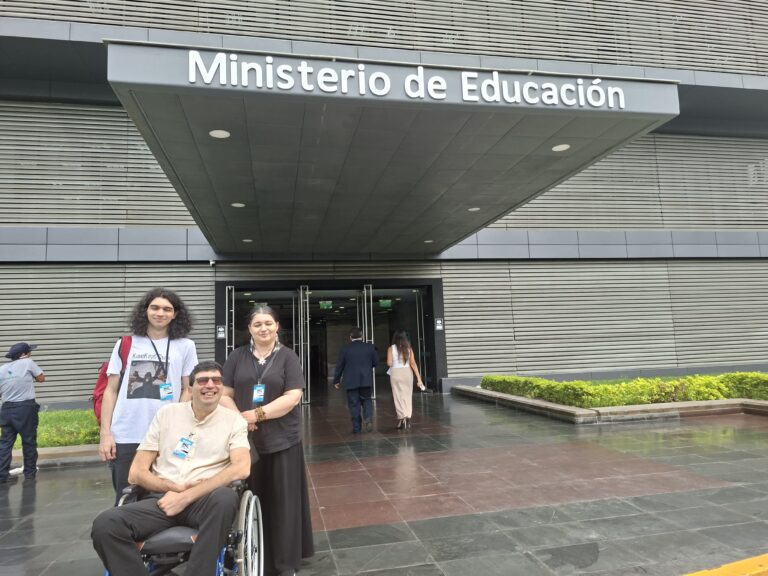
On April 9, we had the opportunity to hold a highly productive meeting at the Peruvian Ministry of Education with the department responsible for intercultural bilingual education (IBE). We shared the Amalipe Center’s experience in the development of intercultural education in Bulgaria—both the achievements and the challenges related to access to and the quality of education for Roma children.
Representing the Ministry of Education at the meeting were:
• Angelica Kispé Sachi, Team Coordinator of the Directorate of Intercultural Bilingual Education
• Rosana Bartra Arevalo, Chief Coordinator of the Directorate for Intercultural Bilingual Education (DEIB)
• Pila Butrón Casas, Coordinator of the Pedagogical Team at the General Directorate for General Basic Education (DIGBR)
• Melida Conisla Laukata, Specialist at the Directorate-General for General Basic Education (DIGBR)
• Diana Salcedo Colona: Specialist on the Management Team of the Directorate for Intercultural Bilingual Education (DEIB)
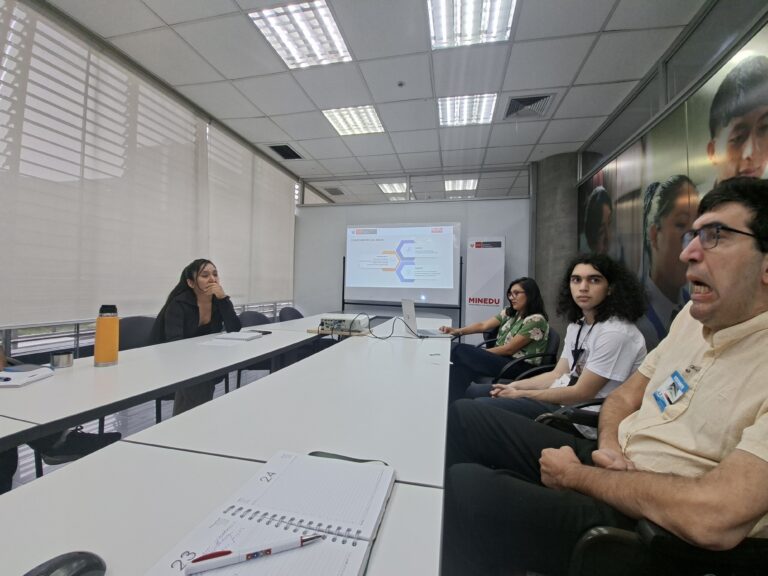
For their part, our colleagues from Peru presented an impressive scale of the initiative: Intercultural bilingual education is a national policy covering over 26,000 schools (32% of all schools in the country). In these schools, instruction is conducted in both Spanish and the languages of indigenous communities—with a clear goal: to preserve languages, culture, and identity. This progress is particularly significant given previous policies aimed at assimilation and the erasure of cultural differences.
What is Intercultural Bilingual Education?
Characteristics of the model. The model is implemented in two ways:
• IBE for cultural and linguistic affirmation—for communities where the mother tongue is still alive and actively used.
• ICBE for cultural and linguistic revitalization — for communities where the mother tongue is endangered or has already fallen into passive use.
The model is aimed at students from the indigenous population enrolled in the regular education system at the elementary, middle, and high school levels. It is implemented in public and private schools, following the general education curriculum with the addition of mother tongue classes. A school may obtain IBU status after applying for it and provided there are students for whom the mother tongue or the language spoken in their families is not Spanish. An important feature is that it is not mandatory for the children to be native speakers of the language; they may no longer speak it, but if it is the family’s language, the school can obtain IBU status. However, a condition is that the school must have qualified bilingual teachers. This does not provide the school with additional funding, and the cost of these teachers must come from the general budget, often at the expense of another teacher. Naturally, this creates competition among schools and is one of the reasons why in large cities—where, no matter how large the number of migrants from the Andes and the Amazon may be, they represent a small percentage of the population—there are also only a small number of bilingual schools. In Lima, for example, there is only one.
You can read more about the model HERE
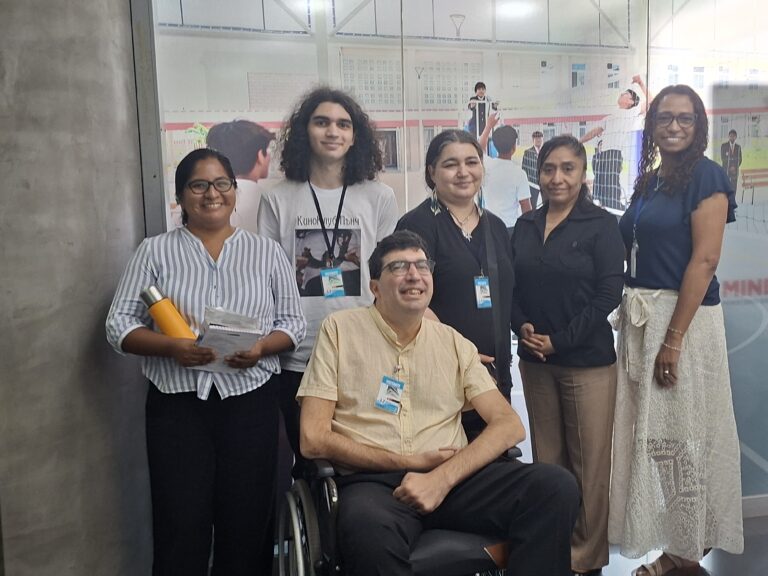
Currently, there are 26,397 elementary, middle, and high schools operating in the country, serving 1,238,923 students across Peru’s 24 regions. A special directorate within the Ministry of Education is responsible for these schools.
The model for implementing the IBO has been developed in great detail, taking into account the diverse context, language proficiency levels, school management structures, assessment, and methodological support. Unfortunately, not everything is implemented in an ideal manner due to the challenges the Peruvian education system still faces, namely the lack of sufficient teachers with appropriate qualifications, the lack of intercultural schools in Lima and major cities, and the need to improve access to education for all children
Such meetings remind us that while the contexts may differ, the goal is shared: an education that respects, includes, and gives every child a chance.
Meeting at UNESCO
UNESCO is the organization in Peru that comprehensively promotes policies for the preservation of identity and cultural diversity and is strongly committed to introducing intercultural and bilingual education at the secondary level, including through the development of its own “Horizons” program.
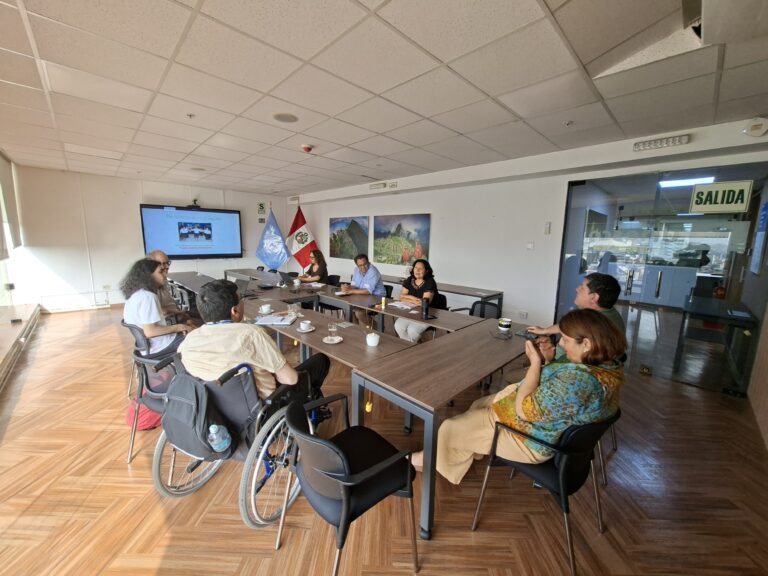
At UNESCO headquarters in Lima, we held a meeting with nearly the entire UNESCO team in Peru to discuss ways to implement intercultural education in Peru and Bulgaria. The UNESCO headquarters is located within the Ministry of Culture—a building many times larger and more imposing than the equivalent ministry in Bulgaria. The numerous signs in Spanish, Quechua, and Aymara immediately catch the eye.
Deyan Kolev and Teodora Krumova shared the Amalipe Center’s experience in introducing courses on “Ethnic Folklore—Roma Folklore,” support for educational mediators, activities for the preservation and development of Romani culture and identity, and the organization’s youth activities.
We discussed the differences in context—while in Bulgaria, Roma and other ethnic minorities have primarily individual rights (including guarantees against attempts at assimilation, which, at least in theory, are enshrined in the Constitution), in Peru this has long been regulated through policies on collective rights and intercultural bilingual education. At the same time, in the field of education, Roma in Bulgaria and Europe often find themselves in a similar position to the indigenous peoples in Lima and the coastal cities.
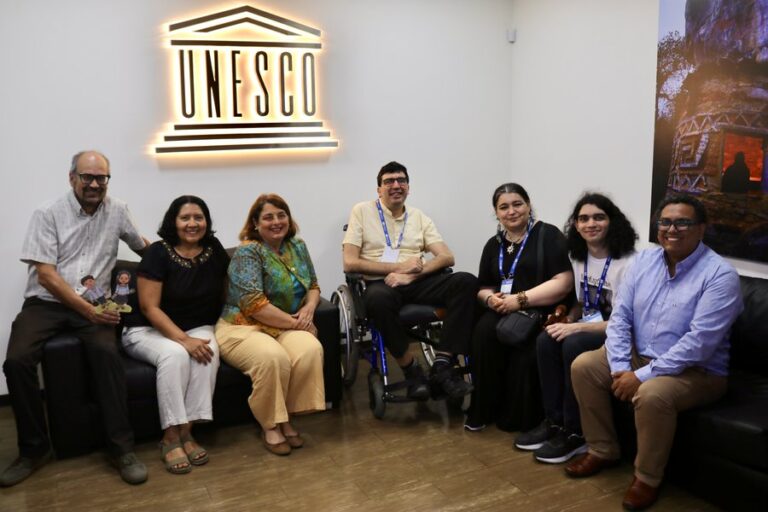
The hosts expressed interest in how we motivate Roma and Bulgarian parents to choose elective courses on Roma culture and praised the efforts of the “Amalipe” to make these classes a sustainable practice, as well as its approach to using intercultural education as a means of preserving identity and building tolerance.
For their part, colleagues from UNESCO shared their long-standing experience in supporting the culture of indigenous peoples, including through intercultural bilingual education. They also presented the HORIZONTES program, aimed at secondary school students—one of the key challenges in Peru. Particularly impressive was the example of the cultural and linguistic revival of the Kukuma-Kukumiria people of Loreto, Amazonia, titled “From Shame to Pride.”
The Kukama People – Kukamiria
They inhabit the provinces of Alto Amazonas, Recena, and Loreto in the regions of Loreto and Ucayali. The total population is approximately 20,000 people, distributed across 120 communities, of which only slightly more than half speak their native language, which belongs to the Guaraní language family. A distinctive feature is that the language makes a grammatical distinction between masculine and feminine speech in various grammatical categories—grammatical gender refers to the speaker’s biological sex, not to the subject. Cucama-Cucamiria is one of the 21 languages at high risk of extinction in Peru.
Faced with the risk of extinction, at the end of the 20th century, the communities of the Kukama-Kukamiria people began to unite in associations and organizations with the primary goal of halting assimilation and preserving and reviving their culture. All of them are united under the umbrella of AIDESEP (Association of Indigenous Peoples for the Development of the Peruvian Jungle).
It quickly became clear that culture and identity could be best preserved through education. Parallel to the process of community mobilization, the development of a program for bilingual teachers began.
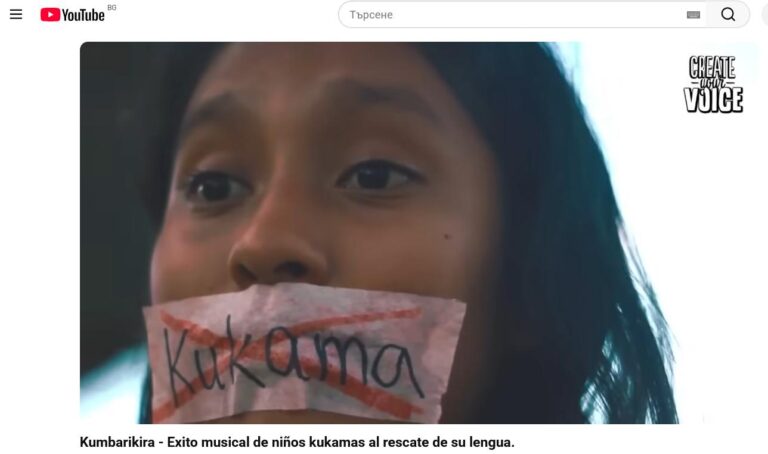
The community revitalization efforts are driven primarily by members of the community itself and also include the community radio station Ukamara (the station is a vital tool for language revitalization—it broadcasts programs in Kukama and promotes the culture among the younger generation), the Festival of Indigenous Languages and Cultures (which brings together students and teachers from various communities to showcase the languages, dances, and traditions of the indigenous peoples of Loreto Province), and many other initiatives and campaigns. Young people and children, who are most vulnerable to the loss of language and culture, play an active role in these campaigns. That is why one of the most popular videos is from the campaign Kumbarikira – Exito musical de niños kukamas al rescate de su lengua

Deyan “Didko” Dimitrov shared the experience of young people from Veliko Tarnovo in establishing the “Punch” Film Club—an inspiring initiative that promotes tolerance and collaboration among young people from different ethnic backgrounds.
We parted ways with a promise to meet again and collaborate on the implementation of intercultural education.
The University of Sciences and Humanities (Universidad de Ciencias y Humanidades – UCH) in Lima, Peru
To complete our overview of the full cycle of the educational system, we also visited the University of Social Sciences and Humanities in Peru, where we were welcomed by the Dean of the Faculty of Humanities and Social Sciences, Dr. William Cortez Maldonado, and his team. The visit was organized with the assistance of Assoc. Prof. Dr. Diyana Dimitrova, a lecturer at the Faculty of Education at St. Cyril and St. Methodius University of Veliko Tarnovo, and Dr. Carla Vasquez from the University of Social Sciences and Humanities.
The University of Sciences and Humanities (Universidad de Ciencias y Humanidades – UCH) in Lima, Peru, is a modern institution of higher education distinguished by its focus on integral education. Founded with the idea of providing accessible yet high-quality education, UCH follows a model known as “Integral Formation.” This means that students are not trained solely in their specific field of study but undergo rigorous training in culture, the arts, sports, and the social sciences with the aim of fostering a strong social consciousness. Therefore, the university’s primary mission is to produce professionals with critical thinking skills who contribute to the country’s development.

The Faculty of Humanities and Social Sciences is at the heart of the university’s educational philosophy. Unlike many technically oriented institutions, UCH believes that the humanities are the foundation of all knowledge. The most prominent field within the faculty is Education. The faculty encourages students to explore the real social issues facing Peru from their very first courses. The programs are structured so that future teachers and professionals spend significant time in real-world settings (schools and communities). The faculty operates an active Cultural Center that organizes exhibitions, theatrical productions, and folklore events, as UCH places great importance on Peruvian national identity.
In a country with significant social disparities, the UCH Faculty of Humanities serves as a “bridge.” It trains professionals who are not merely seeking employment but are striving to reform the country’s educational system.
The university is relatively new but already educates over 6,000 students. The majority of them are from the indigenous population, representing the various indigenous peoples of the coast, the Andes, and the Amazon. The university offers programs in various fields, and a medical program has recently been launched. In the field of education, faculty members are striving to train teachers and specialists to support intercultural bilingual schools in the Andes and the Amazon. Our colleagues did not hide the fact that they are not succeeding in this effort, as the majority of students prefer to stay in Lima.
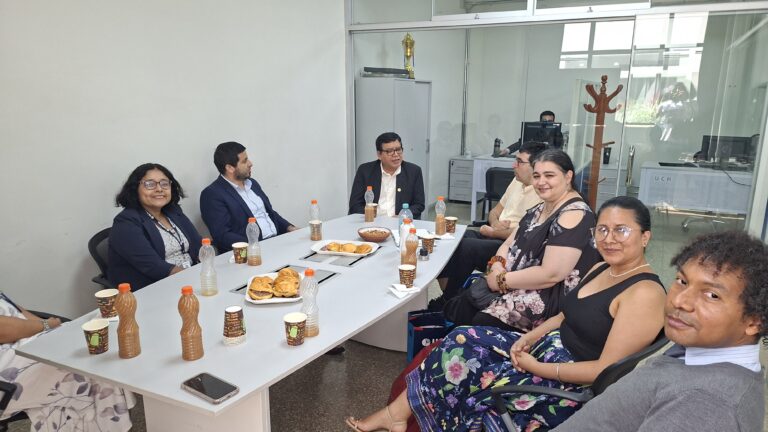
The efforts of the university and other institutions to reverse the long-standing policy of assimilation of indigenous peoples and to foster the development of their identity through education are remarkable. Much more work remains to be done, but positive progress is evident.
At the beginning of the meeting, we had the pleasure of presenting certificates from Veliko Tarnovo University to two of the instructors, Dr. Carla Vázquez and Iván Iraola-Real, for their participation in the online conference. We parted ways with heartfelt wishes for future collaboration.
Ultimately, Lima leaves us with more questions than answers regarding intercultural education. The presence of indigenous peoples (Quechua, Aymara, etc.) (in Latin America, “Indian” carries many negative connotations and is rarely used. Instead, Latin American colleagues and indigenous representatives themselves use “Pueblos Originarios,” “Pueblos Indigenas,” and a number of others) in the city is visible everywhere—Lima has the largest number of Quechua speakers, and the cultural life of most neighborhoods is dotted with events showcasing the contribution of Andean culture, etc. At the same time, there is only one intercultural bilingual school operating there (for migrants from the Amazon region of the Shibipo people), and the Ministry of Education assured us that the main reason for this is a lack of interest on the part of the schools themselves. To obtain the status of “Escuela intercultural bilingue,” an educational institution must apply for it. In practice, this status does not bring additional funding, but rather requires a commitment to hire teachers in the relevant language. It is understandable that current teachers have passive or even active resistance to this. There is also a lack of pressure from parent communities. The efforts of the University of Sciences and Humanities to train a new generation of teachers capable of teaching in intercultural bilingual schools are a step toward resolving the problem of the shortage of qualified educators in this field, and these efforts will likely lead to changes, though this will take time. The Ministry of Education has expressed interest in Bulgaria’s experience with providing additional funding for schools with a high concentration of vulnerable groups and the introduction of the position of educational mediator. This would likely support not only intercultural institutions in the Andes and the Amazon, but also the establishment of such institutions along the coast.
After Lima, we head to the Andes (the Peruvian Sierra), where intercultural bilingual schools are the predominant educational institutions.
