

Roma educational integration in Bulgaria and intercultural education in Peru: the possible exchange of experience and good practices
The situation and rights of the Roma in Bulgaria and Europe on the one hand, and of the indigenous peoples in Peru and Latin America, are very different. Not so much because in one case we are talking about a people who came to Europe (especially Western Europe) at a relatively late stage, and in the other – about peoples who inhabited the Western Hemisphere millennia before it was conquered (“discovered” is the most inappropriate term possible): the time marker is not the most important, especially with regard to Eastern Europe and Bulgaria, where the Roma settled more than a millennium ago and from this point of view are the local population, not newly arrived migrants.
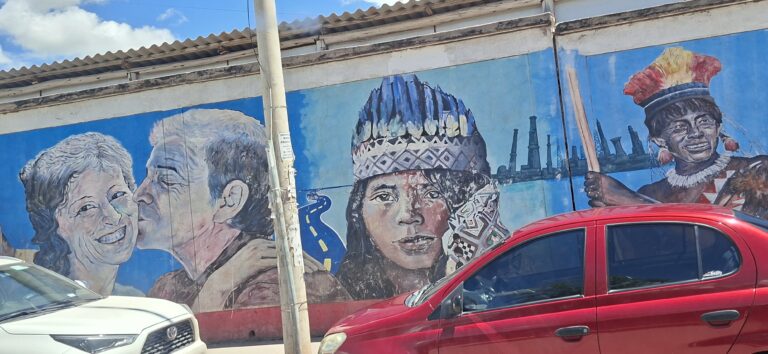
More importantly, numerous international documents ratified by Latin American countries grant collective rights to indigenous peoples and the latter are subjects of law precisely as peoples:
- Convention 169 of the International Labor Organization (approved in 1989 and ratified by Peru in 1994),
- the UN Declaration on the Rights of Indigenous Peoples (2007) and a number of others.
This is not the case with Roma in Bulgaria and Europe:
- The EU Framework for Equality, Inclusion and Participation of Roma (2021),
- the subsequent EU Council Recommendations (March 2022), as well as
- the National Strategy for Equality, Inclusion and Participation of Roma (May 2022)
set important guidelines for government policies for Roma, without guaranteeing or recommending collective rights. In Bulgaria and the EU, the individual rights of everyone are guaranteed, incl. the right to identity and protection from discrimination, they (along with Roma participation and equality of Roma women) are among the main emphases in the Strategic Frameworks and Roma policies, but without the provision of collective rights.
However, education, and intercultural education in particular, are areas where there are many similar challenges. Accordingly, the exchange of experience and successful practices from both continents is entirely possible and would benefit everyone.
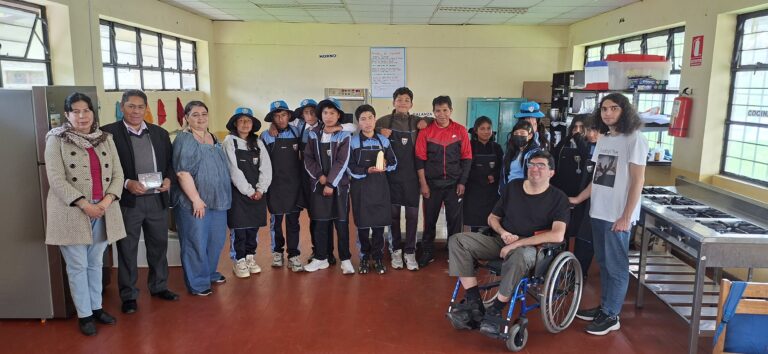

Among the common challenges we can highlight:
- lower levels of coverage in the education system and in school life of Roma (in Bulgaria and the EU) and indigenous peoples (Peru and other Latin American countries). The latter applies especially to rural areas and to the secondary level of education. In recent years, Bulgaria has achieved important successes in reducing the proportion of early school leavers, but these relate mostly to cities and especially to the majority of ethnic Bulgarians;
- preservation of identity, especially among younger and more educated representatives of the Roma community and indigenous peoples: preservation of identity is not only/not so much a moral issue, but is directly related to the self-esteem, socio-emotional competences and civic engagement of students. It is also directly related to the commitment/participation of parents in the activities of schools and the education system.

- Parental and local community involvement: this is a serious problem facing all Bulgarian schools, especially for Roma parents, who find it difficult to recognize anything of themselves in schools and the education system. In the Peruvian Andes, parental involvement is part of the need to maintain the school network and the traditional culture of Quechua and Aymara (related primarily to voluntary activities in support of the community, including the so-called reciprocity (ayniy)*). However, parental involvement and control over the educational process is significantly weaker than in neighboring Ecuador and Bolivia.
- Discrimination and tolerance: one of the main challenges to Roma integration is the strong anti-Roma prejudices, stereotypes and discrimination (popularized as “anti-Gypsyism”). The same applies to discrimination against indigenous people in Peru and Latin America. The latter is strong not only among the Creoles (the small percentage of descendants of Spaniards/Europeans), but even among the mestizos (the majority of Peruvians of mixed Spanish-Indian descent). This strong discrimination (expressed in the popular “inca-si, indio-no”/ “Inca – yes, Indian – no”) is particularly acute on the coast and leads to lower educational outcomes and expectations for indigenous students, as well as their lower participation, especially in secondary and university education.
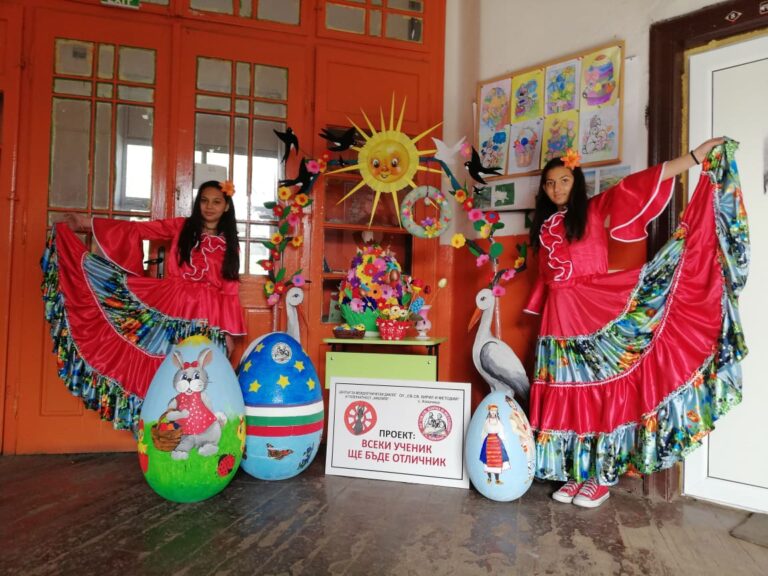
Of course, many other common/similar challenges that Roma and indigenous education face can be identified. It is particularly important that intercultural education is seen as the key to overcoming most of them. It is a targeted educational policy (supported by governments, educational institutions and local communities) to a greater extent in Peru (and Latin America), especially in the Andes and Amazonia. In Bulgaria (and the EU) intercultural education is also identified as a priority, without being considered a top priority. In fact, regarding intercultural education, the Peruvian education system is divided into two parallel parts – intercultural bilingual schools in the Andes and Amazonia and mainstream, Spanish-language schools without intercultural elements in coastal cities (Lima and others), as well as partially in the Andes and Amazonia.
Bulgarian schools can also be divided into two parallel educational realities, without being separate systems. About 44-48% of schools are “with a concentration of vulnerable groups” (according to data from the Bulgarian Ministry of Education), with vulnerability being determined not by ethnicity, but by the education of the parents – children from families with less than secondary education are considered a “vulnerable group”. On the other hand, in over 26% of schools, vulnerable groups are below 2%. Intercultural education is significantly more prevalent in schools with a concentration of vulnerable groups, and this is more of an initiative of NGOs and the schools themselves, supported in various ways by the Ministry of Education. In other schools, intercultural education is rather symbolic: it is set as a mandatory requirement for the curricula in all subjects, but is reduced to a symbolic presentation of one or two topics (e.g. one or two Roma fairy tales, legends, songs, which sometimes reinforce stereotypes rather than overcoming them).
The exchange of successful experiences can benefit each of the mentioned subsystems. Even “at first glance” this exchange can proceed in the following directions:
Experience from Bulgaria that can also work in Peru:
-
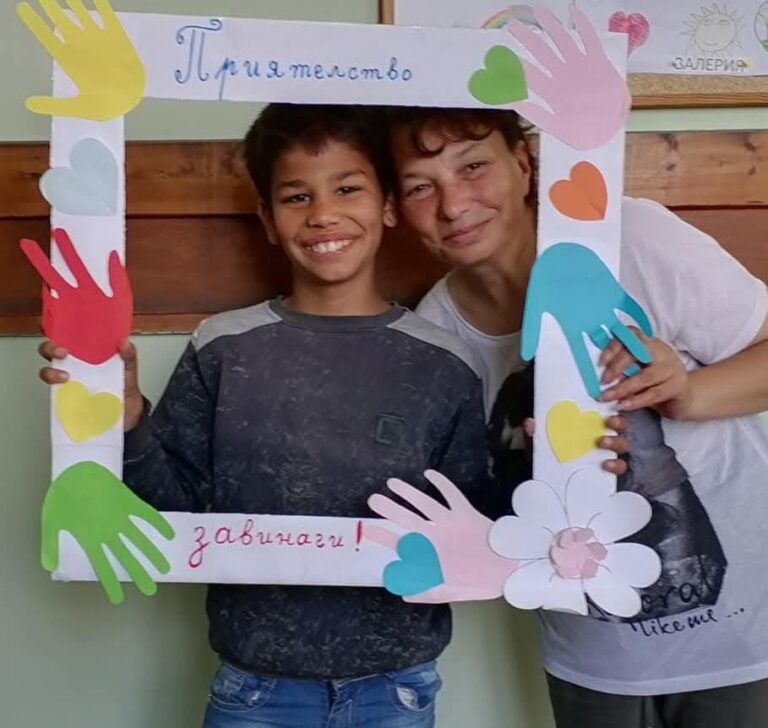
Specific funding for schools with a concentration of vulnerable groups: since 2018, the Ministry of Education has been providing specific funding from the state budget for schools with a concentration of children from families with less than secondary education (they are defined as “vulnerable groups”). That is, these schools receive funding like the others plus additional funds through which they pay educational mediators and supplement teachers’ salaries. The logic is to attract motivated teachers who work in a more difficult environment. Defining a special budget for the salaries of educational mediators is a prerequisite for the absence of conflict between them and teachers.
Although this system is by no means ideal, it could also be applied in Peru to intercultural bilingual schools (IBS): of course, after significant modification. It would provide an incentive for more educational institutions, including in Lima and along the coast, to acquire IBI status, providing the additional resources they need to invest (for teachers of local languages, etc.).
2. Educational mediators: this position/profession is unknown in Peru, but there is definitely a need for it – especially in the Andes and Amazon. The existing practice of parents/people from the community supporting schools and children’s education on a voluntary basis (e.g. accompanying children during the transition from the village where they live to school, taking care of children’s attendance, etc.) is positive, but it cannot be comprehensive and sustainable. Educational mediators in Bulgaria are also representatives of the local community and take care of children’s attendance and working with parents, as they are employees/staff who receive a monthly salary. Of course, this is an expense for the state budget, but it pays off many times over.
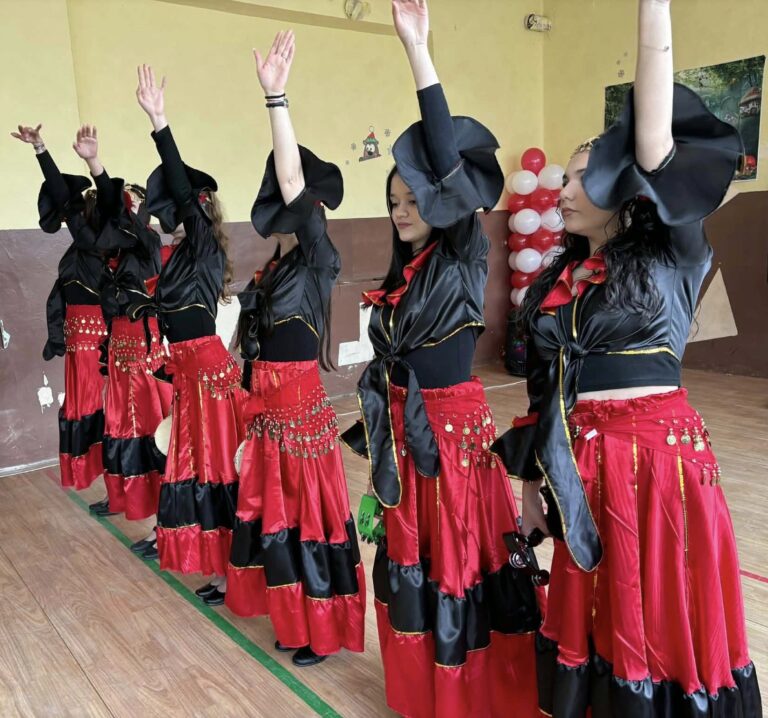
3. Intercultural education in conditions without collective rights and obligation: as we have indicated above, the Roma in Bulgaria do not have collective rights. Intercultural education (such as classes on Roma culture, interest activities and a number of others) is carried out at the request of parents/students, teachers, directors. This situation is reminiscent of the schools in Lima and the coast, that is, outside the traditional territories of the indigenous peoples, in which they have collective rights. Currently, intercultural education is practically absent in these schools, which is one of the most serious shortcomings. The experience of Bulgaria in intercultural education (especially classes or interest activities on Roma culture/folklore) can be particularly useful in the above situation (not so much in the Andes, where intercultural education is significantly more seriously developed).
4. The creation of central and protected schools: Bulgaria went through a painful process of optimizing the school network. Many mistakes were made in it (e.g. the closure of too many schools, including those with many children in them, which increased the dropout rate), but the overall positive effects cannot be denied. An important part of the process was the creation of central and protected schools. Central schools are those that educate children from various settlements where there are no schools. The state provides free transportation and full-day organization of the educational process in central schools (including free lunch and afternoon classes). Thus, students spend most of the day there, fully preparing for their studies, and also have activities related to their interests and rest. Protected schools are those whose closure would lead to serious obstacles to attendance and therefore they cannot be closed – no matter how small the number of children. The state ensures their normal functioning by paying the necessary number of teachers. It is particularly important that, at least initially, the state takes care of the necessary repairs in the central and protected schools (This was done with funds from the European Regional Development Fund, and currently the need for such investments is becoming increasingly acute again).
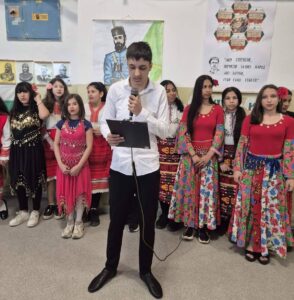
It is clear that the environment in which schools operate in the Peruvian Sierra and Amazonia is different from the Bulgarian one, but adapting such experiences would provide heuristic opportunities. Certainly, additional investments in school infrastructure are needed in the Andes and Amazonia so that schools provide educational conditions that at least partially resemble those on the coast.
5. Desegregation policies and prevention of secondary segregation: They are one of the main focuses when talking about the education of Roma children. Segregation is an urban problem and does not apply to villages where, for demographic reasons, only representatives of minorities live. But in cities, the problem of the so-called “white flight” is widespread – when Roma students exceed 20-25%, ethnic Bulgarians deregister their children. Solving this problem is a “tough nut” and education systems throughout Europe face serious difficulties in achieving this task. Nevertheless, Bulgaria has achieved successes, especially in some municipalities and schools.
The problem of segregation exists in Lima and some of the other big cities. The experience from Europe, although not undisputed, can be used – as well as that from the United States, of course.
Peruvian experience that can be used in Bulgaria
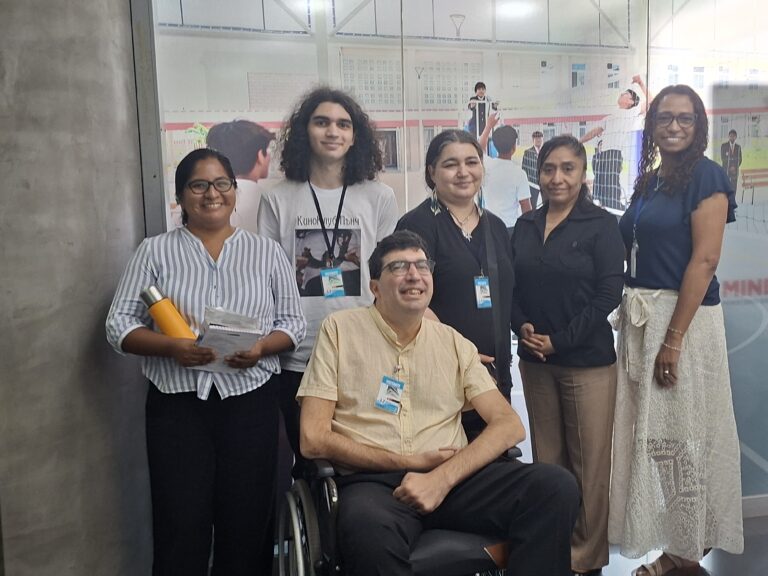
What the Bulgarian education system is worth borrowing from Peru is, first of all, the strong political commitment to implementing intercultural education and preserving the identity of children from ethnic minorities. Once again, we should emphasize that this is a cardinal change in the concept of the goals of education – only until 2-3 decades ago, the Peruvian school aimed more to “unify” children within the Spanish-language matrix of education. The cardinal change – from assimilation to identity through education – has not yet been fully and everywhere implemented. This is what many educators in the Andes and in Lima told us: like Bulgaria and many other countries, they claimed that good intentions are difficult to implement in practice and still do not reach everyone… However, it is indicative that the political intention of identity through education is clearly articulated, intercultural bilingual education is defined as an important means of its implementation, and the entire education system (from Lima to the most remote provinces) must comply with this.
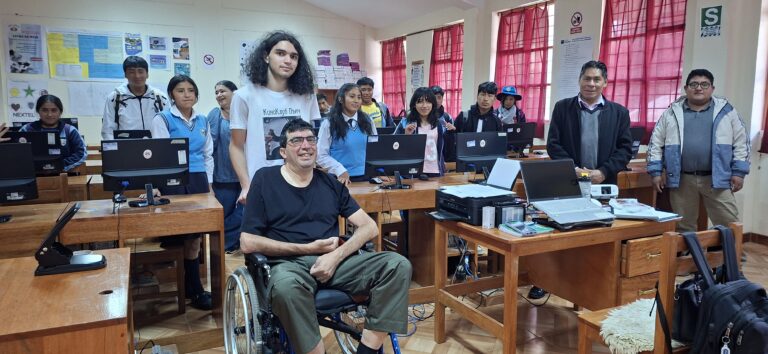
In Bulgaria, intercultural education is more of a “priority of words” than an everyday reality. Both in the education law and in practice it happens primarily due to pressure from a small number of civil society organizations (Amalipe and others) and individual schools. The Ministry of Education supports this process, but without prioritizing it. It would be good to “borrow” political determination from Peru.
The Peruvian institutional infrastructure for intercultural education is also significantly more developed than in Bulgaria and the EU. Within the Dirección General de Educación Básica Alternativa, Intercultural Bilingüe y de Servicios Educativos en el Ámbito Rural (General Directorate for Basic and Alternative Education, Intercultural Bilingual Education and Educational Services in Rural Areas), there is a separate Dirección de Educación Intercultural Bilingüe. Its specialists deal exclusively with IBE. Within the regional structures of the Ministry of Education, as well as local educational structures, there are also experts engaged solely with IBE. In addition, the Ministry of Education maintains the Registro Nacional de Instituciones Educativas EIB (National Register of Educational Institutions for IBE), as well as a special register of teachers who have undergone training/qualification to work in IBE.
The analogous institutional infrastructure in Bulgaria is considerably weaker. Some time ago, there was a small department “Educational Integration through Intercultural Education” in the Ministry of Education, but it was closed down. Today, intercultural education is the task of the Center for Educational Integration of Children and Students from Ethnic Minorities (a decentralized structure of the Ministry of Education, which deals with many other duties). In practice, a good institutional infrastructure exists for the so-called “inclusive education”, which is perceived primarily as being concerned with the problems of children with special educational needs and has no relation to intercultural education.
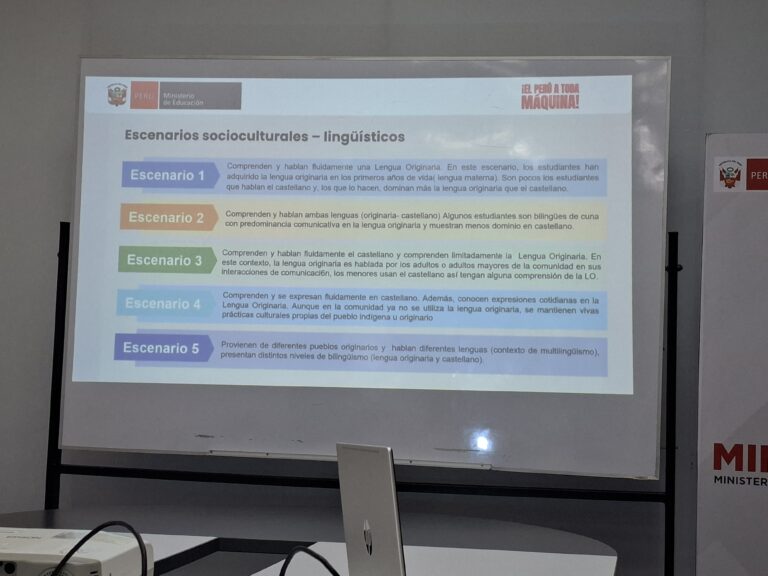
Bilingual education in general, its five models and the many supporting materials and elements that the Ministry of Education in Peru is developing is an important area in which the Latin American country is ahead of the EU countries and can provide successful practices. Educators in Bulgaria can probably recognize the environment in which the two models and the five scenarios of the IBE are implemented. Of course, their activities would be different, but they can certainly use the Peruvian experience.
You can see more about the intercultural bilingual education system in Peru here.

NGO experience

Civil society organizations in Bulgaria are one of the drivers in the efforts to introduce intercultural education and educational integration of Roma children. Probably the most active of them is the Amalipe Center. It promotes the introduction of several practices that can be borrowed in Peru and Latin America:
- intercultural education through classes on Roma culture: since 2002, Amalipe has been promoting the introduction of elective classes on “Folklore of Ethnicities – Roma Folklore”. They are taught by teachers in the respective school (primary teachers, history, literature teachers or others) whom the organization trains. Textbooks, exercise books and other educational materials have also been prepared. The educational process is in Bulgarian, which allows students from different ethnicities (not only Roma) to participate in it, and some knowledge of the Roma language is also included. Studying this subject is at the request of the students and parents, of course – with the consent of the school principal.
Currently, Folklore of Ethnicities is studied as an elective subject or interest activity in nearly 300 schools across the country, which is 15% of all schools and ¼ of schools with a large percentage of Roma students. The main difference with schools in Peru is that schools in Bulgaria offer classes in “Folklore of Ethnicities” to all students, not just Roma students.
This model can be successfully implemented both in IBU in the Andes and Amazonia, and in mass schools in Lima and other large cities. Through it, intercultural knowledge, in a fascinating and interesting way, can reach thousands of students – regardless of their ethnicity. Thus, it will contribute both to preserving the identity of children from indigenous peoples, and to the formation of tolerance among all.
-

Network of Schools for Intercultural Education: Amalipe coordinates a network of 259 schools “Mission Excelent: Inspired to Succeed”. The participation of the schools is completely voluntary. The organization and the network support them by exchanging successful experiences and peer support between the individual schools – this way they feel supported in their hard efforts by partners who face the same challenges. Equally important, Amalipe supports these schools in advocating for the definition of educational policies. This way their voice is heard by the educational institutions at the national level and they actively participate in defining the main directions along which school education develops.
There is no doubt that there is a need to develop an informal school network/association of schools that implement IBE and/or work with indigenous children in Peru. The involvement of NGOs in this process would be a guarantee of its quality and because it would not be controlled by government institutions.
- Network of educational mediators: since 2020, the organization has also been developing a network of educational mediators who work in schools across the country. The mediators are employed by the respective school principals. Within the network (participation in it is also completely voluntary), mediators receive methodological support for the fulfillment of their duties and peer support from other mediators. Thus, like schools, they are also not alone in their difficult efforts. Amalipe’s advocacy support for the development of the profession of “educational mediator” is also particularly important: the organization is one of the main factors for the widespread introduction of this position (currently over 1,600 mediators work, practically in almost all schools with a concentration of vulnerable groups), for its payment from the state budget, etc.
As we have indicated above, the position of educational mediator is necessary in Peru, as well as in other Latin American countries. Its introduction will also highlight the need for a network of mediators.
- Development of student leadership: in parallel with the above activities, Amalipe works with schools to introduce various forms of student leadership. These include, for example, the formation of a Student Parliament in each school, the election of a student ombudsman, student mentors who work with other students (e.g. those at risk of dropping out) and a number of others. Student leaders activate their classmates, conduct informal peer training on civic education topics, and form an active civic culture. They are also active assistants to teachers and school management.
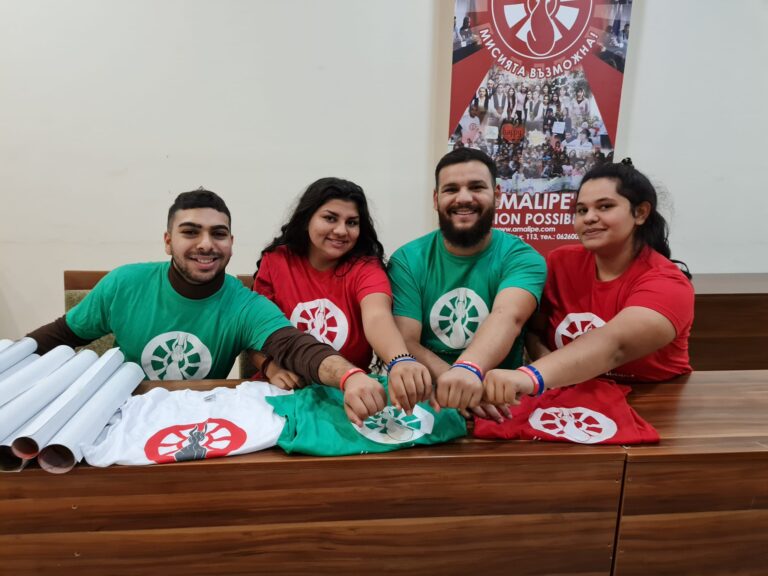
Both Amalipe and other organizations (e.g. Teach for Bulgaria, etc.) have a proven track record of successful implementation of pedagogical innovations. Many of the most successful practices in education in Bulgaria were initially introduced by NGOs. Civil society organizations are an important factor in intercultural education in Ecuador, Bolivia, and other Latin American countries. Peru needs to catch up in this regard.
Related articles:
Intercultural Education Beyond Borders: Lessons from Peru (Part I)
What Is Inter-cultural Bilingual Education in Peru
*Ainy is a life and philosophical concept in Andean culture, related to reciprocity and the requirement to help other people and the entire community. In their daily lives, the Quechua and Aymara follow Ainy, for example by helping others in daily activities (e.g., when building a new house, everyone from the respective village voluntarily gets involved), voluntarily supporting community activities (e.g., every man or woman, head of a family becomes an informal “mayor” for a year, organizing community events, supporting the education of children, etc.). In Bulgaria, a similar concept of reciprocity can be observed among more conservative Roma groups. For example, among the Kaldarashi Roma, it is customary for everyone to donate money to the newlyweds at a wedding (one of the most important holidays in the community), and in the following years, the newlyweds attend the wedding of each family of the donors, also donating an amount that is equal to or greater than the amount received. In the more distant past, in rural regions, it was customary for all ethnic groups for community members to volunteer their labor to help build a house, harvest crops, or meet other needs of their fellow villagers.