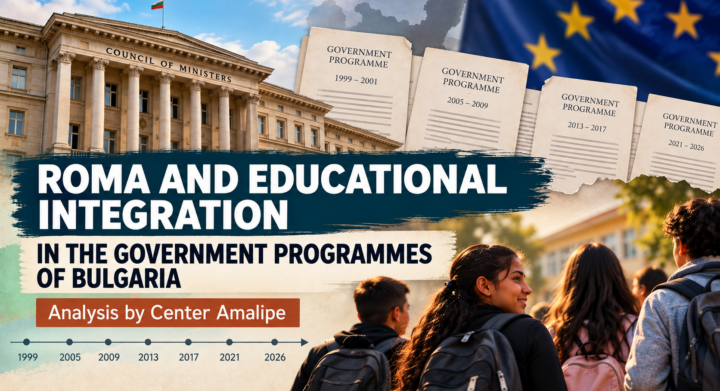
For anyone familiar with Bulgarian reality and with the education system and practice, it is self-evident — “with unquestionable clarity” (Kant) — that educational integration in its many dimensions is essential for overcoming inequalities, achieving the broadest possible access to education and improving its quality. Equally self-evident is the need to achieve real progress in […]
The Center for Interethnic Dialogue and Tolerance Amalipe is a non-governmental organisation working on intercultural education, educational integration and school education since 2002. At present, the organisation coordinates a network of 259 schools throughout the country (the majority of which have a high concentration of vulnerable groups), as well as an informal network of more […]
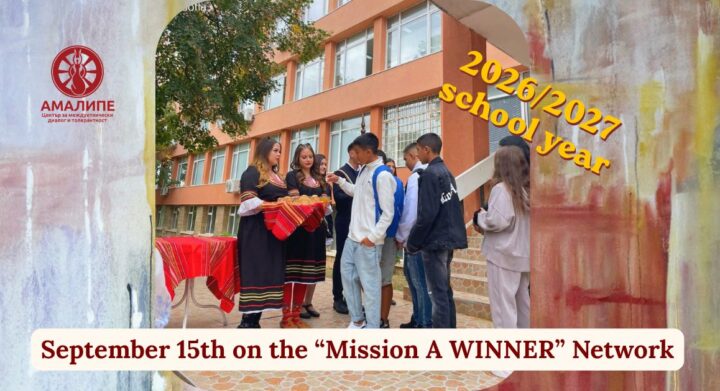
There are several dates in everyone’s life that remain unforgettable. One of them is 15 September. This year, too, 15 September arrived with plenty of sunshine, smiles, anticipation and excitement, but also with many questions about the school year ahead. The schools in the “Mission Achiever: Inspired to Succeed” School Network, developed by Amalipe Center […]
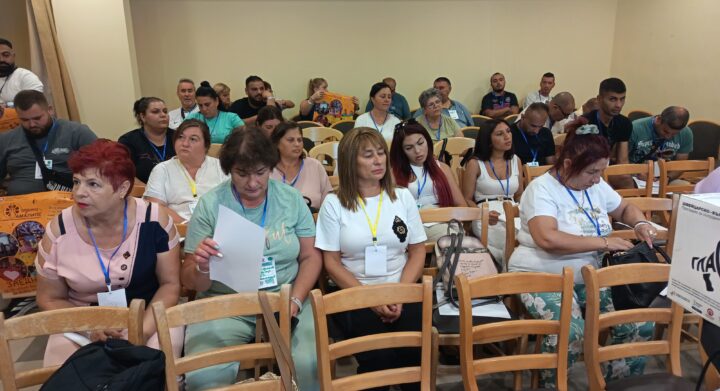
On 11 September, Amalipe Centre presented the SASTIPE mental health platform to 40 mediators as part of the National Meeting of Mediators in Sunny Beach. The presentation formed part of the project’s efforts to promote its resources among people who work directly with families and local communities every day. Including this topic in the national […]
On 15 September, schools from the “Mission Achiever: Inspired to Succeed” School Network of the Amalipe Center for Interethnic Dialogue and Tolerance will welcome their students for the start of the new school year. As is tradition, a number of the school opening ceremonies will be attended by representatives of state institutions, diplomatic missions and […]
In recent days, the important debate on the funding of school education and on how the model can become fairer, providing greater security for small schools and creating the conditions for higher-quality education, has once again begun. The issue is not new – it has been discussed for years, generating polarised views: from proposals on […]
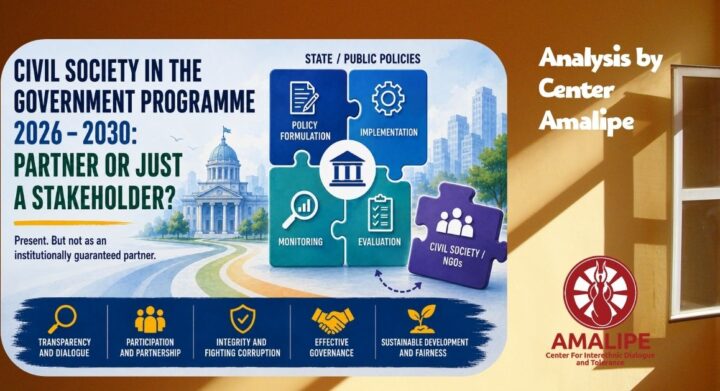
The Government’s Governance Programme for 2026–2030 contains a number of commitments to transparency, dialogue, combating corruption and many other issues. These are largely framed as tasks for public institutions. Even a cursory review of the Programme – a 208-page document covering almost every sphere of public life – shows that civil society is not identified […]
REPORT on the Opinions Adopted by the Civil Society Development Council July 2025 – August 2026 Powers of the CSDC Regarding the Adoption of Opinions The Civil Society Development Council (CSDC) was established pursuant to Article 4(3) of the Non-Profit Legal Entities Act (NPLEA) as an advisory body to the Council of Ministers. The Council […]
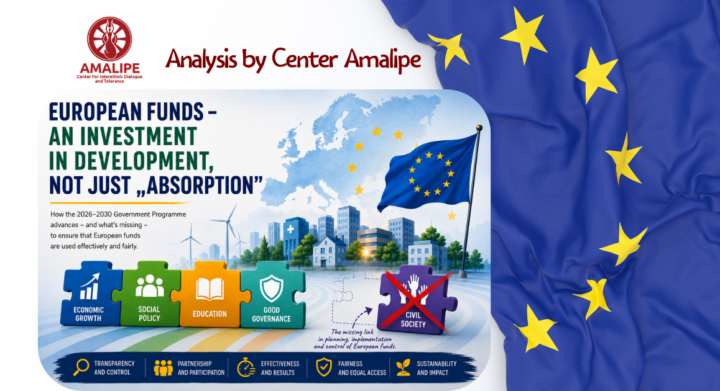
The section of the Radev Government’s Governance Programme devoted to “effective management of EU funds” is considerably better developed than some other parts of the Programme. It sets out meaningful objectives and activities that could lead to the effective use of the EU funding available to Bulgaria. At the same time, there are also some […]
On 12 August, the Council of Ministers adopted Bulgaria’s Governance Programme for 2026–2030. The document is comprehensive and extensive – 208 pages covering almost all areas of public life and setting out objectives and expected results. Somewhat surprisingly, education is one of the areas developed in considerable detail. What is particularly striking, however, is the […]